
Read Charles County Property Tax Records
Two official systems divide the work. The Maryland State Department of Assessments and Taxation Real Property Search holds the assessment card for every Charles County parcel. Charles County Treasury runs the billing side: bills, payments, abatements, address changes, liens, and tax sale. It handles the money side of the tax roll. Start with the SDAT value. Then match its account details to Treasury before concluding what is actually due.
| Field | What It Shows | Where |
|---|---|---|
| Land, improvements, and total | Separate value components and phase-in figures | SDAT parcel card |
| Assessment year | The valuation cycle represented on the card | SDAT parcel card |
| Exemption and occupancy indicators | Program-related fields that must be read separately | SDAT parcel card |
| Bill and payment status | Current billing, additions, abatements, or delinquency context | County Treasury |
| Property number and bill address | The identifiers used in the tax-account system | Treasury inquiry |
An assessment is not a sale price. It is not a promise of current market value either. SDAT estimates market value from land and improvements. It follows Maryland's three-year reassessment cycle, and it may phase a new assessment into taxable value over time. The bill then layers on the applicable rates and credits. For ownership, check the latest deed in the land records. The name on a Treasury bill is not legal proof of title.
Two Charles County Tax Systems
SDAT is the assessment agency. Its Charles County card lists the account, premises and mailing addresses, assessment figures, a transfer summary, a deed reference, and exemption indicators. Treasury is the billing agency. Its separate inquiry is where the current tax account, delinquency, or tax-sale context appears. A careful lookup keeps both account identifiers. It also confirms that the premises, legal description, and map references all point to the same land.
Keep the records separate. A Treasury account is a billing record, an SDAT card is an assessment record, and neither substitutes for a recorded deed.
Search Charles County Treasury With the Right Fields
The Property Tax Account Inquiry offers three routes in. The property number from a prior bill is cleanest. Owner surname works too, though it reflects billing data rather than the latest deed. Address searching requires splitting components that SDAT treats differently.
| Search field | How to enter it | Use |
|---|---|---|
| Property Number | County property or tax number | Best direct account route |
| Owner Last Name | Surname as carried in billing | Useful when the number is unknown |
| Street Number | Numeric component | Address route |
| Street Direction | N, S, E, or W when applicable | Separate directional field |
| Street Name | Road name | Core street match |
| Street Suffix | Examples include DR, ST, and AVE | Separate suffix field |
That syntax explains a common frustration. The same street can succeed in one portal and fail in another. Keep the original address in your notes, then adjust only the direction and suffix for each official form.
Note: No historical cutoff was published for the current Treasury inquiry, so save the observation date with every result.
A Charles County Assessment Card in Practice
The official sample Charles County SDAT result shows assessment and transfer fields sharing one card.
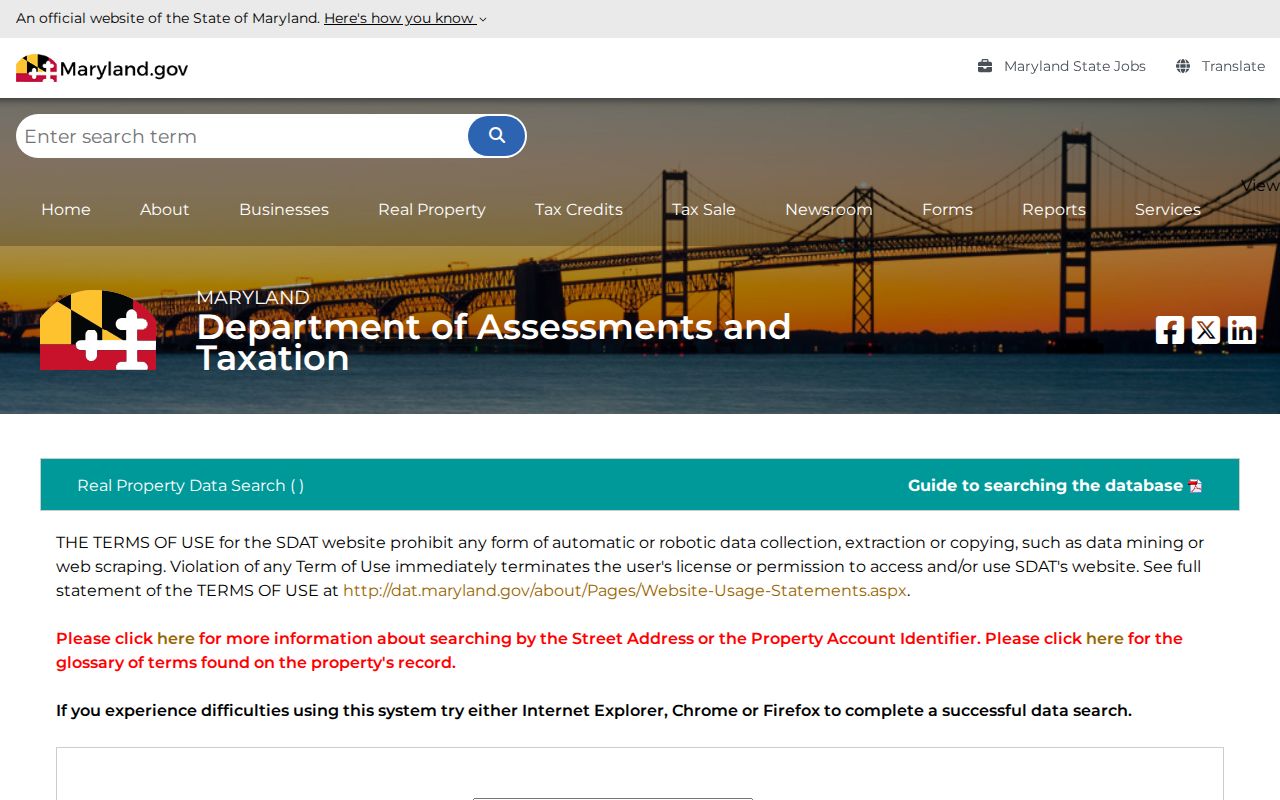
The sample identifies account 006207, splits land from improvements, displays dated assessment columns, and includes a deed reference. It illustrates how to read the fields, not a countywide value trend.
Charles County's Three Reassessment Areas
SDAT's Charles County schedule splits the county into three areas on a rotating three-year cycle. Area 1 took effect January 1, 2025. It returns January 1, 2028. Area 2 took effect January 1, 2023 and is scheduled for January 1, 2026. Area 3 took effect January 1, 2024. It comes up January 1, 2027. The rotation matters when you compare neighboring properties. Two Charles County parcels can sit at different points in their reassessment or phase-in schedules. Record the area, effective date, land component, improvement component, total, and any phase-in amount. Copying only the biggest number invites mistakes.
Look Up a Charles County Tax Bill
A solid Charles County property tax lookup moves from identification to billing. That order cuts false matches between similarly named streets. It also keeps an administrative owner name from being mistaken for title proof.
- Find the parcel in SDAT and copy the county, district, account, premises address, map/grid/parcel fields, and legal description.
- Open Treasury's inquiry and search first by property number, or use the separate address components.
- Read the current billing status and compare it with SDAT's dated assessment and exemption-related fields.
- If delinquency or tax sale appears relevant, verify it with Treasury and preserve the retrieval date before relying on it.
- Assessed value
- SDAT's valuation figure for tax administration, potentially subject to phase-in and credits.
- Tax rate or levy
- The rate applied to the appropriate taxable base, labeled by fiscal year and component.
- Homestead-related status
- An occupancy or credit field that must not be inferred from another indicator on the card.
- Tax lien
- A governmental claim arising from unpaid property tax, requiring current Treasury verification.
FY2026 Rates and Tax-Sale Context
For current billing rules, due dates, credits, transfers, and tax-sale information, the County tax page is the right source. The June 12, 2025 FY2026 budget notice reported a County Government rate of $1.141 per $100 of assessed value plus a Fire/Rescue component of $0.064 per $100. Label those figures by fiscal year and component. Annual property tax is also not recordation tax. Treasury reported the recordation-tax rate became $7 per $500 effective July 25, 2025. That tax applies to covered recorded transfers. It is not an annual parcel levy. A delinquency signal deserves direct confirmation from Treasury. The county publishes no separate official foreclosure list.
Check Credits Without Guessing From Occupancy
An SDAT card can carry owner-occupancy, homestead, homeowners' tax-credit, exemption, and taxable-value fields. Each describes a different program. An H, D, or N occupancy display alone proves nothing about credit eligibility. Read the current card. Then follow the applicable SDAT or Treasury program instructions. Note the label exactly, the displayed status, and the assessment year. A credit can seem missing. Use the correction and application route the responsible agency publishes rather than treating an older tax bill as conclusive.
Note: Credits and exemptions can alter taxable figures without changing the deed, lot dimensions, or recorded ownership.
Contest a Charles County Assessment
The SDAT assessment appeal process starts with the assessment notice. Owners can work through the worksheet and area sales analysis. Then they can move up the administrative levels SDAT describes. Hearings may happen in writing, by phone, by video, or in person. Later appeals go to the Property Tax Assessment Appeal Board. Maryland Tax Court is the next step. Each carries its own deadlines. The online intake asks for County, Notice Number, and Control Number. It states that only the owner may appeal through that portal. The official assessment appeal portal displays those controls.
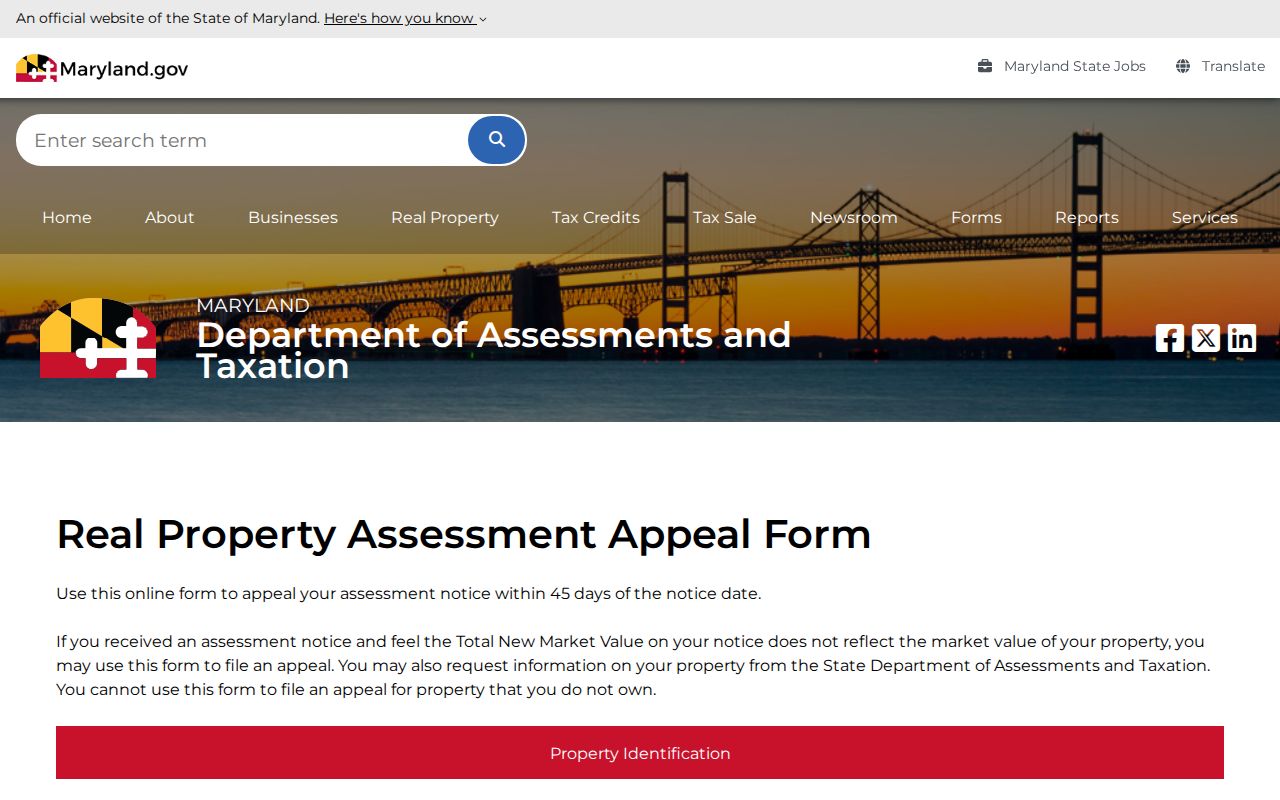
An address by itself will not get an appeal filed online. The notice identifiers are what tie a filing to the assessed account.
Appeal window. File within 45 days of the assessment notice. Other routes include a petition for review by the first working day after January 1 in a non-reassessment year and a qualified January-through-June purchaser's 60-day route.
Preserve a Verifiable Charles County Tax Record
Keep a full record trail. Start with the SDAT account, district, map/grid/parcel components, legal-description summary, assessment dates, and deed reference. Then add the Treasury property number. Include the billing status, fiscal year, rate component, retrieval date, and direct source URL. Those details make any property records request precise. If the online page is down, call Treasury or SDAT instead of relying on an unofficial listing.
A dispute file needs more. Preserve the assessment notice, worksheet, comparable-sales material, photographs or condition evidence, and every filing confirmation. Ownership questions point elsewhere: use the Charles County deed records to trace the owner of record. Boundary questions call for the parcel map guide first, then the controlling deed, plat, or survey.
Phone and counter service still matter when a web result lacks the billing year or adjustment needed. Charles County Treasury sits at 200 Baltimore Street, La Plata. It lists 301-645-0685 or 301-870-2249, generally Monday through Friday from 8:00 a.m. to 4:30 p.m. The SDAT Charles office lists 301-932-2440. Confirm current hours before you travel. Bring the property number, account identifier, address, owner surname, and tax year. Staff can then route the question quickly.
Put any written request in specific terms. Name the exact account. Name the exact record, whether a dated bill, payment ledger, abatement, address-change record, lien document, or tax-sale notice. The Maryland Public Information Act can reach agency records not routinely posted. It remains subject to exemptions and actual search, preparation, and duplication costs. It does not force an office to answer a legal question or build a new analysis. Ask for a named existing record and the response will be cleaner.